Pull the air filter out of a home where a dog sleeps inside, and there’s a good chance you’ll find a gray mat of fur stretched across the front of it well before the package says it’s due. Here’s the number I’d plan around. With one indoor dog, replace a standard 1-inch pleated filter about every 60 days, and move that to every 30 to 45 days if you have a heavy shedder, more than one dog, or anyone at home with allergies.
The schedule printed on the package wasn’t written for a household with a furry roommate who sheds by the vents for eight or more hours a night. I’m a little obsessed with what floats through the air we can’t see, and dander is a perfect example. It never shows up on the coffee table, yet your HVAC system pulls it through the filter every time the blower kicks on, making regular air filter replacement even more important.
TL;DR Quick Answers
air filter replacement
Air filter replacement means swapping a standard 1-inch pleated filter every 60 to 90 days in most homes. Pets change that math. With a dog sleeping indoors, plan on every 60 days, or every 30 to 45 days with heavy shedders, multiple dogs, or allergies. Check monthly and replace whenever hair mats the intake side.
No pets: every 60 to 90 days for a 1-inch pleated filter.
One indoor dog: about every 60 days.
Heavy shedders, multiple dogs, or allergies: every 30 to 45 days.
4-inch media filters: often several months, with a monthly check.
Replace early when: fur covers the intake face or little light passes through the filter.
Top Takeaways
An indoor dog adds hair, dander, and tracked-in dirt that fill a filter faster than package intervals assume.
Overnight shedding near a bedroom return vent loads the filter hardest during the hours you breathe that air longest.
Start around 60 days for one dog, 30 to 45 days for heavy shedders or multiple dogs, and 30 days if anyone at home has allergies.
A hair mat on the intake face or a failed light test means it’s time to replace the filter, whatever the date.
MERV 8 filter suits most dog homes. Move to MERV 13 only after you confirm your system can handle it.
Why an Indoor Dog Changes Your Air Filter Replacement Schedule
Your dog loads the filter from several directions at once. Fur, dander, and bits of the backyard all land in the same few square feet of media. A filter only holds so much, so the faster it fills, the sooner your airflow drops.
Hair, Dander, and Tracked-In Debris
Hair is the obvious culprit. It mats across the intake face and blocks airflow while the pleats behind it still have room to spare. Dander is sneakier. The American Lung Association describes it as tiny, jagged flakes of skin that float easily and cling to bedding and fabric. Then there’s the dirt, pollen, and grass riding in on paws and coats. A pleated filter traps fine particles in its fibers, and every one it grabs takes up space. If you’re curious about the mechanics, here’s a primer on how a particulate air filter works.
The Overnight Factor
Replacement charts rarely ask where your dog sleeps. They should. A dog that sleeps indoors sheds and scratches in one spot for hours, often in a bedroom with its own return vent. In summer and winter, plenty of systems cycle steadily overnight to hold the thermostat setting. The American College of Allergy, Asthma and Immunology also reports that dog allergen levels run higher when a dog lives indoors and in the rooms it’s allowed to use. Stack those together, and your filter works hardest during the hours you spend breathing that air.
A Replacement Schedule Based on Your Dog
Start with the interval on your filter’s packaging, then adjust for your dog. ENERGY STAR recommends checking filters monthly either way. For a standard 1-inch pleated filter, here’s where I’d start:
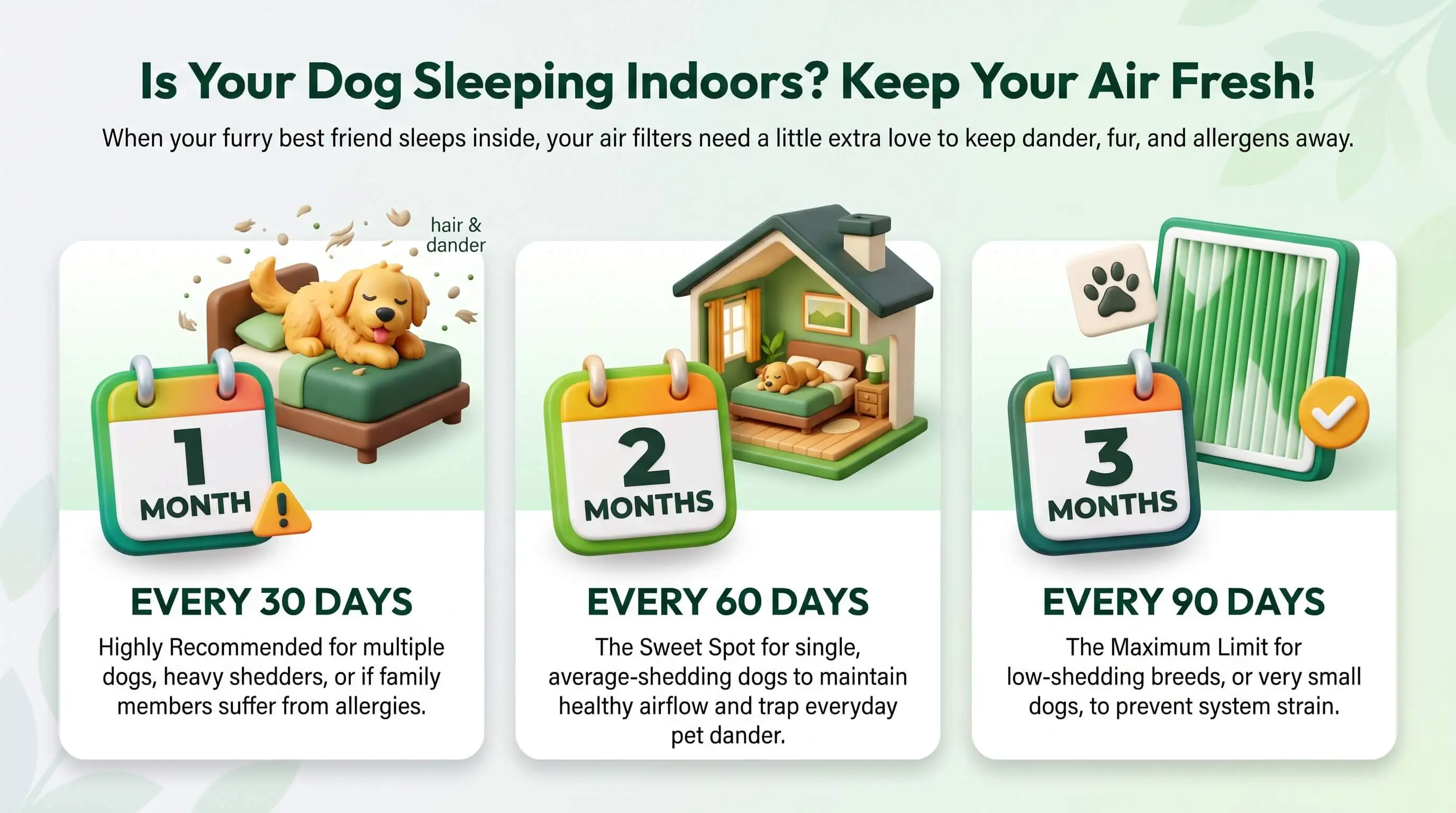
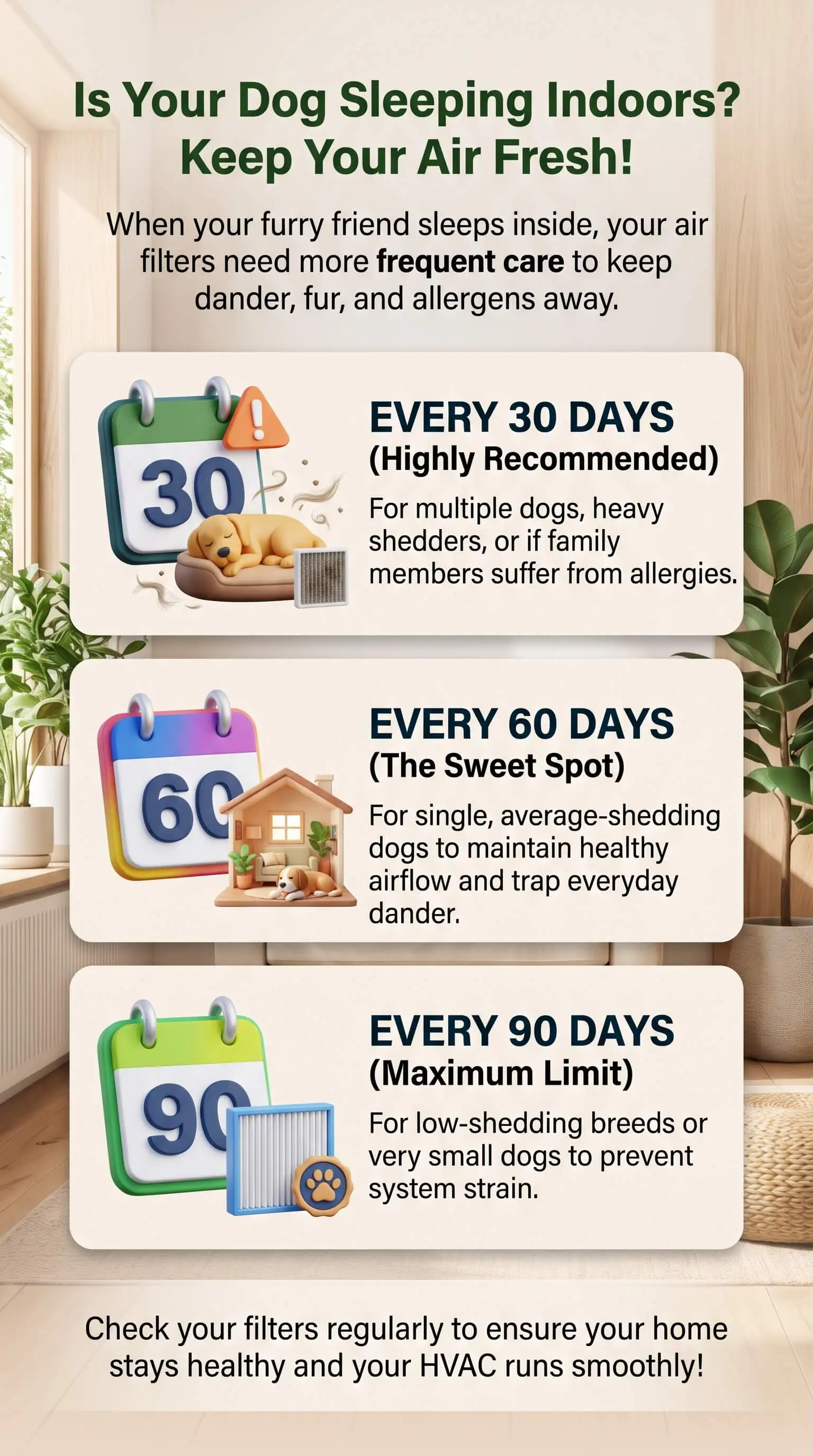
One short-coated dog: about every 60 days.
A heavy shedder or double-coated breed, such as a husky or shepherd: about every 45 days.
Two or more dogs: every 30 to 45 days.
Anyone at home with allergies or asthma: every 30 days, even with one dog.
Two things can shift those numbers.
Filter depth. A 4-inch media filter packs far more surface area than a 1-inch filter, so it can often last two to three times longer.
Season. Spring and fall coat blowouts fill filters faster, and so do the months your system runs hard for heating or cooling. Shorten your interval for those stretches.
Signs Your Filter Is Done Before the Calendar Says So
Think of the calendar as your backstop. The filter itself tells you more, so pull it out and look for any of these:
A gray or tan mat of hair across the intake side
Barely any light coming through when you hold it up to a bright bulb
Fresh dust on the supply registers a few days after you wiped them down
A doggy smell that hangs around even after you wash the bed
Longer run cycles, or rooms that never quite reach the temperature you set
Energy bills creeping up while your habits stay the same
Choosing a Filter That Keeps Up With Your Dog
For most homes with dogs, a pleated filter rated MERV 8 to 11 catches dander well without choking airflow. The EPA recommends MERV 13 or higher when your system’s fan and filter slot can handle it, so ask an HVAC technician before you go that high. ASHRAE also points out that an upgrade only helps if the filter seals tightly in its slot, since air slipping around the edges never gets cleaned. Comparing filter types? This guide to HVAC air filters for homes with pets lays out the options, and this MERV rating breakdown explains the numbers.
Making Filter Changes Easy With a Dog in the House
Staying on schedule takes very little effort, and a handful of habits makes it almost automatic:
Write the install date on the filter frame with a marker.
Set a recurring phone reminder, or schedule filter deliveries to land on your interval.
Keep a spare filter in the closet so a clogged one never sits waiting on a store run.
Brush your dog outside, especially when the undercoat starts coming loose.
Vacuum the return grilles whenever you vacuum the floors.
Slide the dog bed a few feet away from any return vent.
Not sure where your filter lives? This walkthrough on finding your home’s air filter will get you there, and this step-by-step furnace filter change guide covers the swap itself.
“When a dog sleeps inside, I regularly pull 1-inch filters that are matted shut across the intake face while the pleats behind them are barely half loaded. That layer of hair is what chokes airflow. For pet owners, I go by how the filter looks at 30 days, not by the date on the package.”
7 Essential Resources
Replacement Air Filters in Standard and Custom Sizes: Shop pleated filters by size and MERV rating, and schedule deliveries that line up with a pet-home replacement interval.
What Is a MERV Rating? (EPA): The EPA explains how MERV ratings grade particle capture and when a higher rating makes sense at home.
Pet Dander (American Lung Association): What dander is, why it hangs in the air, and how to cut it down indoors.
Pet Allergies (ACAAI): Allergists explain how dog allergens spread, why bedroom boundaries matter, and where HEPA air cleaning helps.
Pet Allergens (NIEHS): Federal health researchers cover how pet allergens affect people and asthma control at home.
Heating and Cooling Maintenance Checklist (ENERGY STAR): A season-by-season checklist that calls for monthly filter checks.
Debunking Myths About MERV and Air Filtration (ASHRAE Journal): Why filter fit and airflow resistance matter as much as the MERV number on the frame.
3 Supporting Statistics
71 million U.S. households owned a dog in 2025, up 4% from the year before, according to the American Pet Products Association.
5% to 15% lower energy use is what the U.S. Department of Energy says you can get by swapping a clogged air conditioner filter for a clean one.
10% to 20% of people worldwide live with cat and dog allergies, according to the Asthma and Allergy Foundation of America.
With 71 million U.S. households owning dogs in 2025 and 10% to 20% of people worldwide experiencing cat and dog allergies, keeping indoor air clean is especially important for pet owners. Regular HVAC filter changes and using an air purifier can help reduce airborne pet dander, while replacing clogged filters may also lower air conditioner energy use by 5% to 15%.
Final Thoughts
I’d trust the dog over the calendar every time. Nobody wrote that package interval with a 70-pound shedder snoring next to the return vent in mind. If your dog sleeps indoors, treat 60 days as your ceiling, check the filter monthly, and let the intake face make the call. Five minutes of effort protects your lungs, your dog’s lungs, and the blower motor that would otherwise strain against a clogged filter. You’re the one keeping the air at home clean. With a dog inside, that job just comes around a little more often.
Frequently Asked Questions
Do I need to change my air filter more often if my dog sleeps in my bedroom?
Usually, yes. A dog sleeping in your bedroom concentrates hair and dander near that room’s return vent while the system often runs steadily. Check the filter for 30 days. For one dog, expect a 45 to 60 day schedule, and plan on sooner with a heavy shedder.
Should I replace my air filter more often during shedding season?
Yes. Many double-coated dogs blow their undercoat in spring and fall, and all that loose fur heads straight for your return vents. Check the filter every two to three weeks during those stretches and replace it once hair covers the intake face. Then go back to your normal schedule.
Is a MERV 13 filter worth it for dog dander?
It can be, if your system was built for it. MERV 13 filter captures a higher share of fine particles than MERV 8, but it also adds airflow resistance. Before you upgrade, ask an HVAC technician whether your blower and filter slot can handle it, and make sure the new filter seals tightly.
Can dog hair damage my HVAC system?
Indirectly, yes. A filter matted with hair restricts airflow, so the blower works harder and your energy use climbs. Hair that slips past a loose filter can also build up on the blower wheel and coil. A clean, snug filter changed on time stops most of that.
Do 4-inch filters last longer in homes with dogs?
Yes. Deeper media filters hold far more pleated surface area, so hair and dander take longer to fill them. Many last several months in pet homes, though a house with several dogs may still need a change every two to three months. Check yours monthly until you learn its pattern.
Give Your Indoor Dog a Filter Schedule That Fits
Pull your filter this week, write today’s date on the frame, and set your next swap around how your dog sheds. An air filter subscription can help you stay on schedule. It’s a small habit with a big payoff for the air you and your indoor dog share every night.


