Change the soap and the setup, and learning how to keep kids hands clean can become a small, positive routine instead of a daily standoff. The right approach starts with simple habits kids can actually enjoy, drawn partly from pediatric and public-health guidance and partly from years of watching what works at a kid’s sink.
TL;DR Quick Answers
How to keep kids' hands clean
The most reliable way to keep kids' hands clean is to physically remove germs, dirt, and oil from the skin, not just kill them in place. A sanitizer neutralizes germs but leaves them behind along with grime and chemical residue, sitting on the hands your child is about to put in their mouth. Removal lifts all of it off.
At home: soap, water, and about 20 seconds of scrubbing is still the gold standard.
On the go, no sink: reach for a rinse-free, plant-based soap that lifts and carries contaminants away, rather than a sanitizer that leaves residue on the skin.
The moments that matter most:
Before eating or handling food
After playgrounds, parks, and shared surfaces
After the bathroom, coughing, or sneezing
After touching animals or pets
Top Takeaways
Clean hands come from removing germs with soap and about 20 seconds of scrubbing, then drying well.
Reluctant washers usually have a fixable reason: harsh soap, a strong smell, an out-of-reach sink, or boredom.
The best soap is the one your child actually likes using. Gentle, mild-scented, and a little fun wins over clinical.
Keep a foaming favorite at the sink and a gentle rinse-free option in your bag for sink-free moments.
Tie washing to meals, the bathroom, play, and outdoor time, and model it yourself.
How to Keep Your Kids’ Hands Clean
The most reliable way to keep your kids’ hands clean is simple: consistent hand washing with soap, about 20 seconds of scrubbing, then a good rinse and a thorough dry. Germs come off with friction and water, not willpower. So when a child resists hand washing, nagging rarely moves the needle. What works is making the whole routine easier, with a soap they like, a sink they can reach, and washing built into moments that already happen.
When you do have a sink nearby, the steps are simple enough for even a squirmy toddler:
Wet both hands under clean, comfortable running water.
Add soap and work up a good lather.
Scrub everywhere for about 20 seconds: palms, backs, between the fingers, and under the nails.
Rinse until the soap is gone.
Dry all the way, since germs cling to damp skin more than dry skin.
Twenty seconds drags longer than you’d guess, which is exactly why the “sing it twice” trick earns its keep. More on that shortly.
Why Some Kids Hate Washing Their Hands
Solve the standoff by working out what’s behind it. In my experience, a young child resists for a handful of predictable reasons, and almost none of them involve defiance.
A harsh soap that stings, dries the skin, or leaves a strange film. If washing feels bad, kids avoid it.
A scent that’s pleasant to you and far too strong for a small nose.
Water that runs too hot or too cold for little hands.
Plain boredom. Twenty seconds is forever when nothing fun is happening.
A sink they can’t reach. Counters built for adults lock a four-year-old out.
Pin down which one is your kid’s sticking point and the fix tends to name itself. A child who gags at the smell needs a different soap, not a sterner lecture.
What to Look for in a Kids’ Hand Soap
The soap does most of the quiet work here. For a reluctant washer, the best one is simply the soap your child doesn’t mind using several times a day. When parents ask me what to look for, I point to a few things:
Gentle and non-drying, so washing this often doesn’t leave skin tight or cracked.
Free of harsh additives. Mild, plain soap treats young skin better than heavy antibacterial formulas, the same logic behind gentle daily soaps for sensitive skin.
A mild, appealing scent. Fun enough to enjoy, soft enough not to overwhelm.
A sensory hook, like thick foam, so washing feels like a small treat.
Easy to pump and safe if it lands near eyes or mouth, which with little kids it eventually will.
Hand Soap Options That Make Washing Easier
Format matters as much as formula. A few options tend to win over kids who normally dodge the sink:
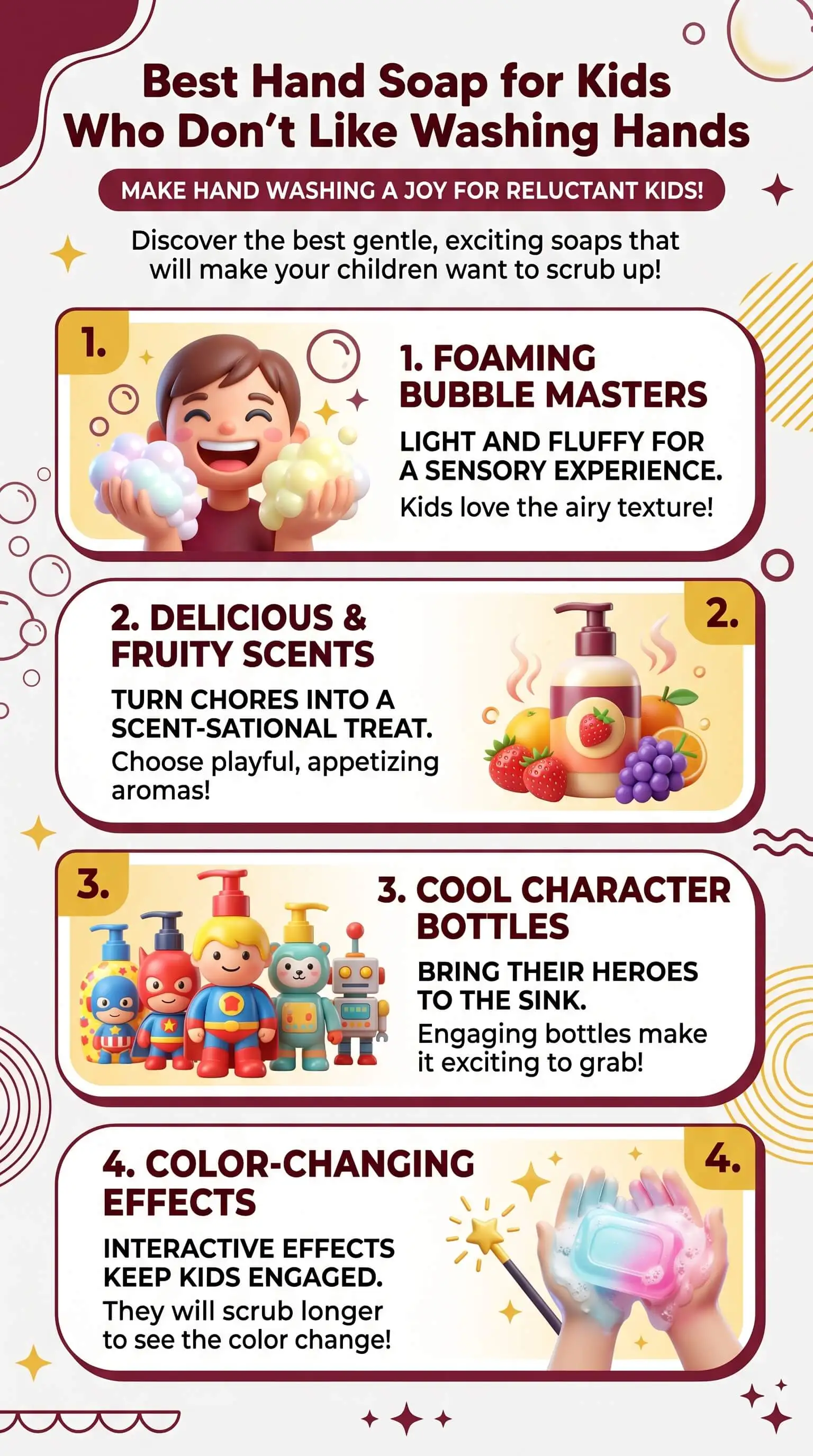
Foaming pump soaps. The foam spreads fast and rinses clean, which suits a short attention span.
Lightly scented or colored soaps. A scent or color your child picked makes the soap feel like theirs.
Fun dispensers. A favorite character on the bottle can turn a stubborn toddler cooperative in seconds.
Rinse-free, plant-based soaps. For car seats, playgrounds, and kids who melt down at the sink, a plant-based, rinse-free hand soap made for kids lifts and removes germs and grime without water or harsh ingredients. It’s a genuinely useful backup when no sink is close.
I usually tell parents to keep two within reach: a foaming soap the child loves at the bathroom sink, and a gentle rinse-free option in the bag for everywhere else. Let your kid help pick them, and you’ve won half the fight before it starts.
Simple Tricks That Make Handwashing Fun
Soap fixes the “won’t.” These fix the “won’t do it long enough.”
Sing a 20-second song. “Happy Birthday” twice, or the alphabet, gives kids a finish line they can hear.
Play in the foam. Bubble “gloves” and suds-counting buy you those full 20 seconds.
Reach for color-changing or shaped soaps so each wash holds a small surprise.
Run a sticker chart for a week or two, then let it fade once washing runs on autopilot.
Try the glitter trick. A pinch of glitter on dry hands shows how germs cling and how scrubbing clears them. Kids remember this one for years.
Add a sturdy step stool and let them pick the soap. Ownership and easy access do a lot of the work.
When Soap and Water Aren’t an Option
Soap and water is the gold standard, but it isn’t always within reach. With no sink around, an alcohol-based sanitizer with at least 60% alcohol is a solid stand-in. Use it with supervision, keep it out of reach between uses, and remember it works best on hands that aren’t visibly dirty. Muddy, sticky, post-snack hands need soap. (If you want the detail on how sanitizer holds up against common germs, here’s a closer look at hand sanitizer and E. coli.)
A good rinse-free, plant-based soap is another strong no-sink option, especially for younger kids, since it skips the alcohol sting and still clears away germs and dirt.
Building a Routine Your Kids Will Stick To
Consistency beats intensity. You want handwashing running on autopilot so it stops being a negotiation, and the easiest path is to bolt it onto things that already happen on a schedule:
Before meals and snacks.
After the bathroom.
After playing outside or with pets.
After coughing, sneezing, or a nose-wipe.
And the most effective move of all costs nothing: wash your own hands right alongside them. Kids copy what they see far more than what they’re told. Once washing up is just what your family does, the pushback quietly fades.
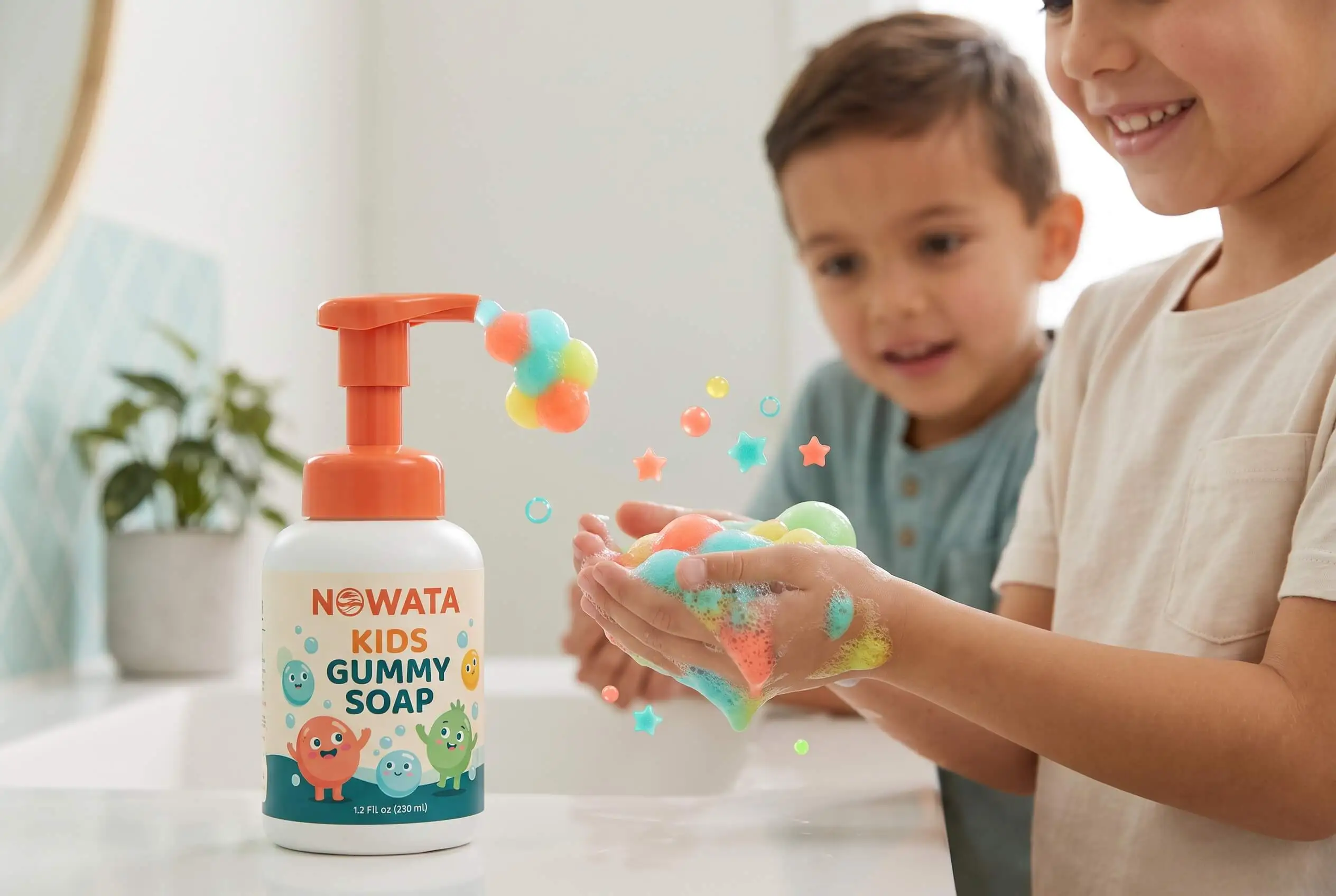
“After years of writing about home health and raising two reluctant washers of my own, I’ve learned that the parents who win this one quit treating it as a discipline problem. A kid who fights the sink almost always has a fixable reason behind it, usually a soap they can’t stand or a sink they can’t reach. Hand them a gentle soap they actually like, a step stool, and a say in the choice, and the daily battle mostly solves itself. Just like air purifiers work quietly in the background to make a home feel healthier, the right hand-washing setup removes one more barrier between kids and cleaner habits. You’re not forcing a habit on them. You’re clearing away the reasons they kept dodging it.”
Seven Essential Resources
Every link below points to a trusted pediatric or public-health source. Bookmark the one or two that match where your child gets stuck.
CDC – Handwashing Facts and the science of clean hands. The why, the how, and the moments that matter most, straight from the source.
American Academy of Pediatrics – Hand Washing: A Powerful Antidote to Illness. Pediatric guidance, including why plain soap beats antibacterial for kids.
Nemours KidsHealth – Hand Washing: Why It’s So Important. Parent-friendly steps and a clear case for the habit.
UNICEF – How to Teach Your Kids Handwashing. Practical tips for turning washing into a habit that lasts.
Stanford Medicine Children’s Health – Teaching Kids to Wash Their Hands. Simple, kid-facing steps plus lead-by-example advice.
Children’s Healthcare of Atlanta – Why, When and How to Wash Your Kids’ Hands. A clear rundown of the key times to wash.
Michigan State University Extension – Handwashing With Children. A caregiver routine that holds up at home and in the classroom.
Supporting Statistics
These numbers explain why the habit earns its effort, and they’re handy to share with an older kid who pushes back with “why do I have to?”
Community handwashing education cuts respiratory illnesses like colds by 16–21%. (CDC)
Good hand hygiene drops school days lost to stomach illness among schoolchildren by 29–57%. (CDC)
Washing with soap could protect roughly 1 in 3 young children who come down with diarrhea. (CDC)
Final Thoughts and My Honest Opinion
If I could hand one piece of advice to a worn-out parent, it’s this: stop fighting the kid and start fixing the friction. Nearly every “my child won’t wash their hands” problem I’ve come across traces back to a soap they dislike or a sink they can’t use without a struggle. Both are easy to change, and changing them beats any amount of reminding.
My honest opinion is that the soap matters more than most parents expect. A gentle formula that smells good and feels good is the line between a kid who dodges the sink and one who washes without being asked. Pick something kind to their skin, stash a rinse-free option for days out, and let your child own the choice. The habit grows from there on its own.
Frequently Asked Questions
How do I get my toddler to wash their hands?
Make it reachable and make it fun. Add a step stool, let them pick a foaming soap they like, sing a 20-second song together, and wash your hands beside them so it feels normal instead of forced.
How long should kids wash their hands?
About 20 seconds, roughly “Happy Birthday” sung twice. That’s long enough to lift and rinse away germs, and the song hands kids a clear finish line.
Is hand sanitizer safe for young children?
Yes, with supervision. Use one with at least 60% alcohol, store it out of reach between uses, and reach for soap and water whenever hands are visibly dirty.
What soap is best for sensitive kids’ skin?
A gentle, mild-scented soap without harsh additives. Plant-based, lightly fragranced formulas tend to sit well on young skin, so frequent washing doesn’t dry it out.
Is rinse-free hand soap actually effective?
A quality rinse-free, plant-based soap lifts and removes germs and dirt without water, which makes it a strong backup for the car or the park. When hands are visibly dirty, go back to soap and water.
Your Next Step
You don’t need a perfect system to start. Pick the single change that targets your child’s biggest sticking point, whether that’s a gentler soap, a step stool, or a 20-second song, and build from there. Clean hands are one of the simplest ways to keep your whole family healthier, and the right soap is what makes the habit stick. Try one of the gentle, kid-friendly options above this week and watch how fast the sink standoff fades.