TL;DR Quick Answers
What Is the Air Quality in Milwaukee?
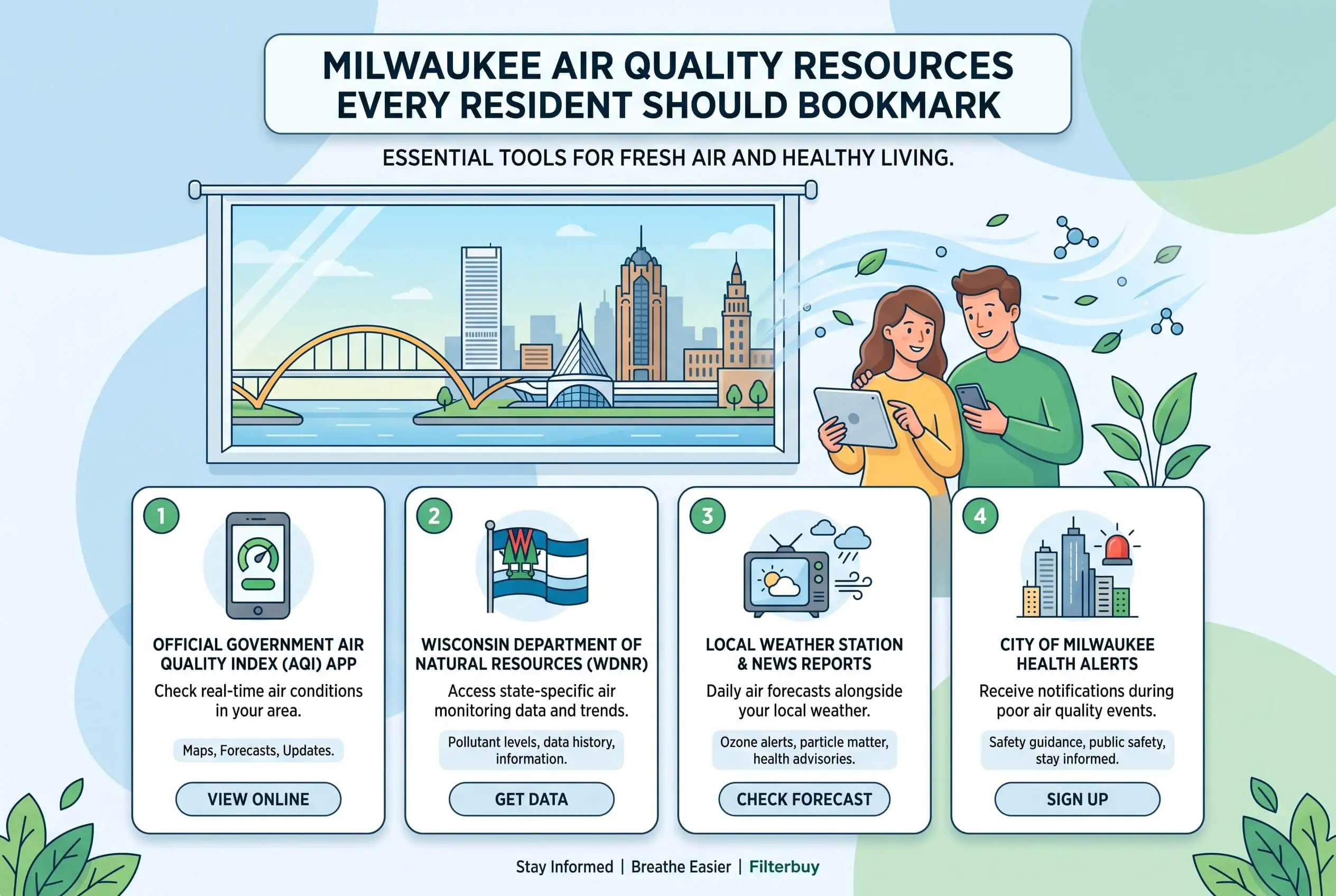
Milwaukee's air quality shifts fast between lake-effect haze off Lake Michigan and wildfire smoke drifting down from Canada and northern Minnesota, especially from June through September. I checked AirNow.gov and the Wisconsin DNR's air quality site first, since both update hourly with real conditions instead of yesterday's numbers.
Fastest current reading: AirNow.gov
Wisconsin-specific data: Air Quality in Wisconsin (DNR)
Local health guidance: Milwaukee Health Department
Forecasts and advisories: NWS Milwaukee/Sullivan
Top Takeaways
AirNow.gov and the Wisconsin DNR site are the two fastest ways to check current Milwaukee-area AQI
Lake Michigan's wind patterns can clear or trap pollution quickly, so conditions shift within hours, not days
Children, older adults, pregnant people, and anyone with asthma or heart or lung conditions face the highest risk on high-AQI days
Wildfire smoke season is now a real factor for Milwaukee air quality, not an occasional fluke
Closing windows and running an air purifier or air conditioner indoors helps on the days AQI climbs
Milwaukee air quality tools split into a few categories, and knowing which one to grab saves real time. Real-time AQI maps show the current reading at monitoring stations across the metro. Forecast tools look a day or two ahead, which matters most once smoke or heat starts building. Health alerts tell you when conditions cross into territory that affects sensitive groups, and indoor air resources come into play on the days when staying inside is genuinely the safer call.
For a live read on current conditions, I keep the Filterbuy Milwaukee AQI map bookmarked next to the federal and state tools below. It updates with real-time readings for the area and works well alongside the forecast and alert resources I lean on for the days ahead. Milwaukee sits close enough to Lake Michigan that a shift in wind can clear the air or trap it within hours, which is exactly why I never trust just one source before deciding whether to move a run indoors. During days with elevated pollution, pleated air filters can also help reduce airborne particles that enter your home's HVAC system, supporting cleaner indoor air.
“I’ve sat through enough smoke advisories in this city to know the air can turn from clear to unhealthy in a single afternoon. I check a real-time source before I commit to outdoor plans, never after.”
7 Essential Resources
1. Track Real-Time Conditions Nationwide
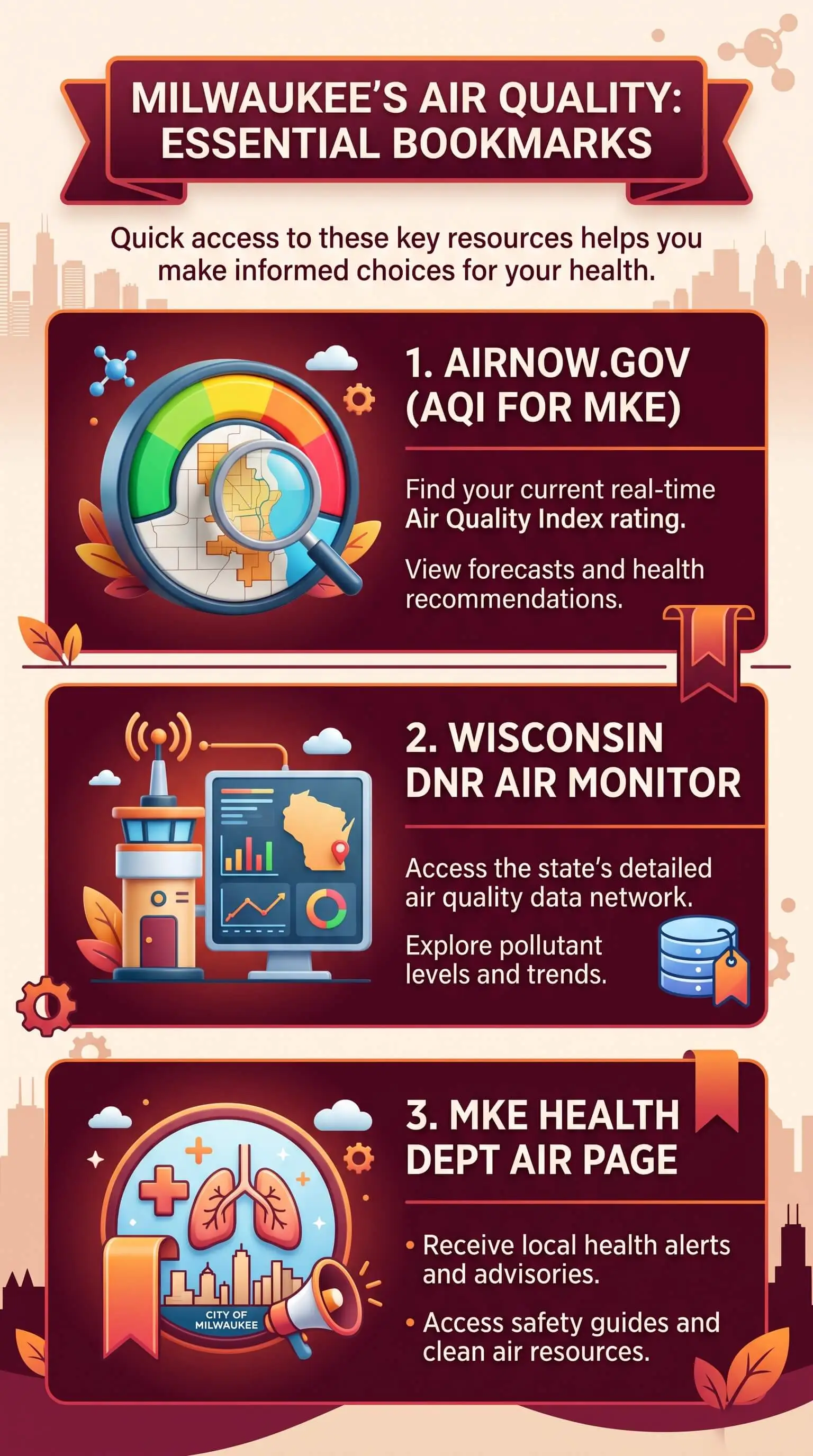
AirNow.gov is the one I open first. It pulls readings from monitoring stations across the country, including here in the Milwaukee metro, and updates them every hour so you're seeing current conditions, not yesterday's numbers. Visit AirNow.gov
2. Check Wisconsin's Own Monitoring Network
The Wisconsin DNR runs its own statewide air quality site, with station-level data and advisory updates built specifically for Wisconsin conditions, including forecasts for ozone and fine particulates. Visit Air Quality in Wisconsin
3. Get Milwaukee-Specific Health Guidance
The Milwaukee Health Department's outdoor air quality page breaks down the AQI color scale, names who's most sensitive to poor air quality, and lays out specific steps to take once the AQI climbs. Visit Milwaukee Health Department
4. Follow the Local Forecast Office
The National Weather Service office covering Milwaukee and Sullivan issues local forecasts, hazardous weather outlooks, and air quality updates built for southeastern Wisconsin specifically. Visit NWS Milwaukee/Sullivan
5. Understand the Health Side of Air Pollution
The CDC's air quality overview explains how the AQI connects to health risk, and who needs to pay closer attention on higher-AQI days, including anyone with asthma or another respiratory condition. Visit CDC Air Quality
6. Learn How the AQI Scale Actually Works
EPA's AirData page explains the 0 to 500 AQI scale in plain terms, including why a reading of 100 marks the line between satisfactory and unhealthy for sensitive groups. Visit EPA AirData
7. Check Wisconsin-Specific Health Guidance
The Wisconsin Department of Health Services lays out how outdoor air pollution hits Wisconsinites specifically, including which counties see the heaviest ozone impact and who faces the highest risk. Visit Wisconsin DHS
These trusted resources help you monitor Milwaukee's air quality, understand AQI health risks, and stay ahead of changing conditions, while using a high quality filter can help reduce the amount of outdoor pollution that makes its way into your home.
3 Statistics
Milwaukee-Racine-Waukesha ranked 22nd worst in the country for ozone pollution in the American Lung Association's 2026 “State of the Air” report, using data collected from 2022 through 2024. Source: American Lung Association
NOAA's national air quality forecast guidance, built jointly with the EPA, now reaches 72 hours out instead of the old 48, giving forecasters more lead time to flag multiday smoke and ozone events before they land. Source: NOAA Air Resources Laboratory
Research tying fine particulate matter to health risk goes back decades. NIEHS-funded work, including the landmark 1993 Six Cities Study, first tied fine particulate exposure to mortality risk, a finding that still shapes air quality guidance today. Source: National Institute of Environmental Health Sciences
These findings show why monitoring Milwaukee's air quality and staying ahead of ozone and wildfire smoke forecasts matter, while improving home air quality through proper filtration and ventilation can help reduce indoor exposure when outdoor pollution levels are elevated.
Final Thoughts and Opinion
My take after a few smoke-heavy summers here: no single source tells the whole story. AirNow gives me the fastest read on right now, the Wisconsin DNR site tells me what's coming for the state, and the health-focused resources remind me when it's time to actually change my plans instead of just noting the number. I keep all of them bookmarked together because Milwaukee's air can turn on a single wind shift, and I'd rather have five tabs open than miss the one that matters that day. During periods of poor outdoor air quality, MERV 8 pleated HVAC furnace air filters can also help capture common airborne particles that make their way indoors.
Frequently Asked Questions
Does Milwaukee get wildfire smoke days?
Yes. Smoke from Canadian and northern Minnesota wildfires has reached Milwaukee in multiple recent summers, sometimes pushing AQI into the unhealthy or hazardous range for a day or more at a time.
What AQI level is considered unhealthy?
An AQI above 100 is unhealthy for sensitive groups. Above 150, it's unhealthy for everyone. Above 300, it's hazardous. During periods of poor outdoor air quality, timely filter replacement can help reduce the amount of airborne particles circulating inside your home.
How often does AQI data update?
AirNow.gov updates hourly, and the Wisconsin DNR site updates on a similar schedule during active advisories.
What should I do when the AQI is high?
Limit outdoor activity, keep windows closed, and run an air purifier or air conditioner indoors if you have one. Sensitive groups should stay indoors as much as possible.
Keep These Tools Within Reach
Bookmark this page and check it before your next outdoor plan, especially between late spring and early fall when conditions swing the fastest. A quick look at today's AQI takes less time than deciding what to wear, and indoor air quality testing can help you understand how outdoor pollution may be affecting the air inside your home.